
Cannabis & Creativity
From jazz clubs to recording studios to painting studios — the relationship between cannabis and creative expression runs deep.
A Long Creative History
The relationship between cannabis and creativity is not new — it stretches back centuries across cultures and art forms. From ancient Hindu texts that describe cannabis as a source of joy and creative insight, to the jazz musicians of 1920s New Orleans who credited "reefer" with loosening their improvisational instincts, to the beat poets of the 1950s, the psychedelic rock musicians of the 1960s, and the hip-hop artists of the 1990s — cannabis has woven itself into creative culture in a way that few other substances have.
Louis Armstrong smoked cannabis daily and credited it with opening his mind musically. The Beatles composed much of their most experimental work under its influence. Bob Marley saw cannabis as spiritually and creatively essential. Willie Nelson, Snoop Dogg, Wiz Khalifa — the list of musicians who openly connect cannabis with their creative process is long and distinguished.
But the connection extends far beyond music. Visual artists, writers, filmmakers, comedians, designers, and programmers have all reported that cannabis — in the right dose and context — can unlock a different mode of thinking. The question is: is this real, or is it perception? The answer, as usual with cannabis, is complicated.
Where the Plant Meets the Muse
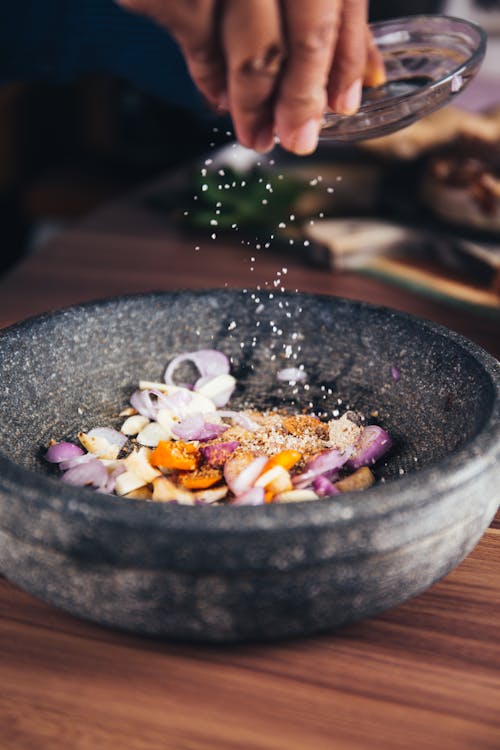
Cannabis has been part of the creative process for centuries. From music to visual art to writing, artists have long turned to the plant to unlock different ways of seeing, hearing, and thinking.
How Cannabis Affects Creative Thinking
Creativity research distinguishes between two types of thinking: convergent thinking (finding the single correct answer to a well-defined problem) and divergent thinking (generating multiple ideas or solutions, making unexpected connections, thinking outside established patterns). Cannabis appears to primarily affect the divergent kind.
THC increases activity in the frontal lobe — the brain region most associated with creative thought, abstract thinking, and planning. It also increases the release of dopamine, which the brain uses to signal reward and motivation. This combination — enhanced frontal lobe activity plus increased dopamine — may explain why cannabis users often report a flood of ideas, unexpected associations, and a heightened sense that their creative output is meaningful.
Cannabis also appears to reduce the brain's filtering mechanisms — the executive control networks that normally keep your thinking focused and linear. In everyday life, these filters are essential for functioning. But in creative work, loosening them can allow ideas to flow more freely, connections to form between seemingly unrelated concepts, and the inner critic to quiet down long enough for raw expression to emerge.
There is also a perceptual component. Cannabis heightens sensory perception — sounds become richer, textures more detailed, colors more vivid. For musicians, visual artists, and writers who rely on sensory richness as raw material, this heightened perception can genuinely expand the palette they are working with.
However, a 2014 study published in Psychopharmacology found that while low doses of cannabis enhanced divergent thinking, high doses actually impaired it. This mirrors the dose-response pattern seen with cannabis and anxiety: a little can help, but too much backfires. The creative sweet spot appears to be a mild to moderate dose that loosens thinking without scrambling it.
Strains and Terpenes for Creative Work
Not all cannabis supports creativity equally. The sativa-leaning strains traditionally associated with mental stimulation tend to be better creative partners than heavy indicas, though the terpene profile is a more reliable guide.
Limonene is the terpene most associated with creative energy. Its mood-elevating properties promote the kind of positive, playful mental state where ideas flow freely. Strains with prominent limonene (citrus aroma) are often first-choice recommendations for creative sessions.
Pinenesupports mental clarity and may counteract some of THC's memory impairment. For creative work that requires you to actually remember and develop your ideas (not just generate them), pinene is valuable. Strains rich in pinene (piney, fresh aroma) help keep the mind sharp while the creative channels open.
Terpinolene is less common but appears in many strains known for creative, uplifting effects. Jack Herer and Durban Poison — two of the most famous "creative strains" — are both terpinolene-dominant.
What to avoid for creative work: heavy myrcene-dominant strains that produce couchlock and sedation, very high-THC strains that scramble thinking rather than loosening it, and anything that makes you feel heavy and sleepy rather than light and engaged.
Popular creative strains to explore: Jack Herer, Durban Poison, Super Lemon Haze, Sour Diesel, Green Crack, and Tangie. Check our current flower menu for availability.
Dosing for Creative Work
Dosing for creativity follows the same principle as dosing for anxiety: less is usually more. The goal is not to get blasted — it is to shift your thinking just enough to access different patterns without losing the ability to execute.
Many creative professionals who use cannabis settle on what they call "micro-dosing" — consuming small amounts (2.5-5mg THC via edible, or one to two small hits of flower) that produce a subtle shift in perception without full-on intoxication. At this level, the inner critic quiets down, associations flow more freely, and the work feels more engaging — but you can still type coherent sentences, play your instrument competently, or mix colors accurately.
Higher doses can be useful for the brainstorming phase — generating raw ideas, exploring wild "what if" scenarios, or breaking out of a creative rut. But the editing, refining, and executing phase almost always goes better either sober or at a very low dose. Many experienced creative cannabis users have a two-phase process: generate freely under mild influence, then refine with clear eyes later.
If you are new to combining cannabis with creative work, try it first during a low-stakes session — doodling, jamming, freewriting — before bringing it into a project with a deadline. Get comfortable with how the combination works for you before relying on it when the pressure is on.
When It Helps vs When It Hinders
Cannabis tends to help creativity when you are brainstorming or generating ideas freely, working on open-ended creative projects, trying to break out of a creative block or habitual patterns, doing work that benefits from enhanced sensory perception (music production, visual art, cooking), or looking to approach a familiar problem from a completely new angle.
Cannabis tends to hinder creativity when you need to execute precise, detail-oriented work, when a project requires sustained focus over many hours (tolerance to cannabis's focusing effects builds quickly within a session), when you are working under pressure or tight deadlines and cannot afford a "bad session," when you need to retain detailed information or follow complex instructions, or when the dose is too high and thinking becomes scattered rather than expansive.
One important consideration: regular, heavy cannabis use can actually reduce baseline creativity over time. The brain adapts to the external stimulus and may become less capable of generating those divergent connections on its own. Periodic breaks — whether full tolerance breaks or simply keeping some creative sessions sober — help maintain both the effectiveness of cannabis as a creative tool and your natural creative capacity.
The Kushner Family: Where Music Meets Cannabis
At Kush Connection, the intersection of cannabis and creativity is not just a topic we write about — it is built into our family history. The Kushner family spent decades in the music and broadcast industry before opening our Montclair dispensary. That background shapes everything about how we think about cannabis.
Jake Kushner — the founder of Kush Connection — grew up immersed in the creative world of radio, music production, and entertainment. He saw firsthand how cannabis and creative expression have always been intertwined in music culture. Not as a crutch or a gimmick, but as a genuine part of the creative process for countless artists.
That is why our dispensary feels different. The music playing in our store is carefully selected. The culture we celebrate is authentic, rooted in decades of real participation — not corporate appropriation. When we talk about cannabis and creativity, we are talking about something our family has lived.
Come visit us at 665 Bloomfield Avenue and experience the vibe for yourself. And if you are a musician, artist, or creative looking for the right strain to accompany your next session, our budtenders speak your language.
Cannabis products are intended for adults 21+ and medical patients with valid identification. Products are not approved by the FDA and are not intended to diagnose, treat, cure, or prevent any disease. Use may cause impairment and dizziness. Do not use while pregnant, breastfeeding, or operating vehicles. Keep all products secure and away from children and pets.